Why Tea Culture Is Returning
Why tea culture is returning globally and how ritual, taste, and wellness are reshaping premium tea.
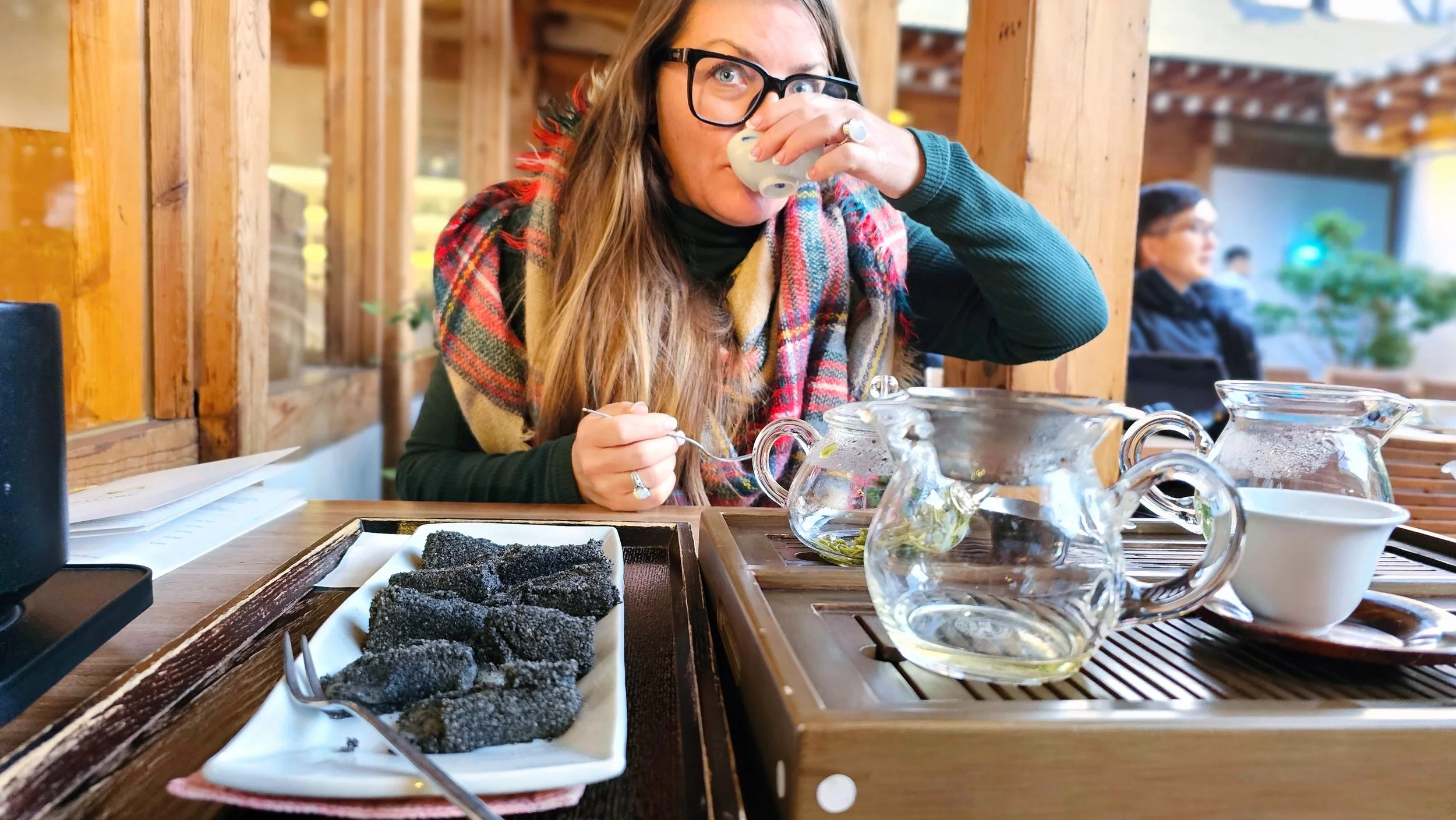
Meredith sipping on green tea in South Korea at a traditional tea house.
Introduction
Tea has always represented more than hydration. Across cultures, it has served as a bridge between agriculture, taste, and human connection.
When people sit with tea they slow down enough to notice flavor, aroma, and the quiet structure of a ritual. That simple act—heating water,
steeping leaves, and sharing a cup—has shaped social life for centuries. As modern consumers rediscover slower and more intentional ways
of living, tea is once again becoming a meaningful part of everyday life. Premium tea culture reconnects people to farmers, terroir,
harvest seasons, and the subtle complexity that exists inside a single leaf. It transforms an ordinary beverage into a moment of presence.
Tea has always represented more than hydration. Across cultures, it has served as a bridge between agriculture, taste, and human connection.
When people sit with tea they slow down enough to notice flavor, aroma, and the quiet structure of a ritual. That simple act—heating water,
steeping leaves, and sharing a cup—has shaped social life for centuries. As modern consumers rediscover slower and more intentional ways
of living, tea is once again becoming a meaningful part of everyday life. Premium tea culture reconnects people to farmers, terroir,
harvest seasons, and the subtle complexity that exists inside a single leaf. It transforms an ordinary beverage into a moment of presence.
Tea has always represented more than hydration. Across cultures, it has served as a bridge between agriculture, taste, and human connection.
When people sit with tea they slow down enough to notice flavor, aroma, and the quiet structure of a ritual. That simple act—heating water,
steeping leaves, and sharing a cup—has shaped social life for centuries. As modern consumers rediscover slower and more intentional ways
of living, tea is once again becoming a meaningful part of everyday life. Premium tea culture reconnects people to farmers, terroir,
harvest seasons, and the subtle complexity that exists inside a single leaf. It transforms an ordinary beverage into a moment of presence.
Tea has always represented more than hydration. Across cultures, it has served as a bridge between agriculture, taste, and human connection.
When people sit with tea they slow down enough to notice flavor, aroma, and the quiet structure of a ritual. That simple act—heating water,
steeping leaves, and sharing a cup—has shaped social life for centuries. As modern consumers rediscover slower and more intentional ways
of living, tea is once again becoming a meaningful part of everyday life. Premium tea culture reconnects people to farmers, terroir,
harvest seasons, and the subtle complexity that exists inside a single leaf. It transforms an ordinary beverage into a moment of presence.
Tea has always represented more than hydration. Across cultures, it has served as a bridge between agriculture, taste, and human connection.
When people sit with tea they slow down enough to notice flavor, aroma, and the quiet structure of a ritual. That simple act—heating water,
steeping leaves, and sharing a cup—has shaped social life for centuries. As modern consumers rediscover slower and more intentional ways
of living, tea is once again becoming a meaningful part of everyday life. Premium tea culture reconnects people to farmers, terroir,
harvest seasons, and the subtle complexity that exists inside a single leaf. It transforms an ordinary beverage into a moment of presence.
Tea has always represented more than hydration. Across cultures, it has served as a bridge between agriculture, taste, and human connection.
When people sit with tea they slow down enough to notice flavor, aroma, and the quiet structure of a ritual. That simple act—heating water,
steeping leaves, and sharing a cup—has shaped social life for centuries. As modern consumers rediscover slower and more intentional ways
of living, tea is once again becoming a meaningful part of everyday life. Premium tea culture reconnects people to farmers, terroir,
harvest seasons, and the subtle complexity that exists inside a single leaf. It transforms an ordinary beverage into a moment of presence.
Tea has always represented more than hydration. Across cultures, it has served as a bridge between agriculture, taste, and human connection.
When people sit with tea they slow down enough to notice flavor, aroma, and the quiet structure of a ritual. That simple act—heating water,
steeping leaves, and sharing a cup—has shaped social life for centuries. As modern consumers rediscover slower and more intentional ways
of living, tea is once again becoming a meaningful part of everyday life. Premium tea culture reconnects people to farmers, terroir,
harvest seasons, and the subtle complexity that exists inside a single leaf. It transforms an ordinary beverage into a moment of presence.
“Tea is not simply something you drink. It is something you practice.”
The Cultural Context
Tea has always represented more than hydration. Across cultures, it has served as a bridge between agriculture, taste, and human connection.
When people sit with tea they slow down enough to notice flavor, aroma, and the quiet structure of a ritual. That simple act—heating water,
steeping leaves, and sharing a cup—has shaped social life for centuries. As modern consumers rediscover slower and more intentional ways
of living, tea is once again becoming a meaningful part of everyday life. Premium tea culture reconnects people to farmers, terroir,
harvest seasons, and the subtle complexity that exists inside a single leaf. It transforms an ordinary beverage into a moment of presence.
Tea has always represented more than hydration. Across cultures, it has served as a bridge between agriculture, taste, and human connection.
When people sit with tea they slow down enough to notice flavor, aroma, and the quiet structure of a ritual. That simple act—heating water,
steeping leaves, and sharing a cup—has shaped social life for centuries. As modern consumers rediscover slower and more intentional ways
of living, tea is once again becoming a meaningful part of everyday life. Premium tea culture reconnects people to farmers, terroir,
harvest seasons, and the subtle complexity that exists inside a single leaf. It transforms an ordinary beverage into a moment of presence.
Tea has always represented more than hydration. Across cultures, it has served as a bridge between agriculture, taste, and human connection.
When people sit with tea they slow down enough to notice flavor, aroma, and the quiet structure of a ritual. That simple act—heating water,
steeping leaves, and sharing a cup—has shaped social life for centuries. As modern consumers rediscover slower and more intentional ways
of living, tea is once again becoming a meaningful part of everyday life. Premium tea culture reconnects people to farmers, terroir,
harvest seasons, and the subtle complexity that exists inside a single leaf. It transforms an ordinary beverage into a moment of presence.
Tea has always represented more than hydration. Across cultures, it has served as a bridge between agriculture, taste, and human connection.
When people sit with tea they slow down enough to notice flavor, aroma, and the quiet structure of a ritual. That simple act—heating water,
steeping leaves, and sharing a cup—has shaped social life for centuries. As modern consumers rediscover slower and more intentional ways
of living, tea is once again becoming a meaningful part of everyday life. Premium tea culture reconnects people to farmers, terroir,
harvest seasons, and the subtle complexity that exists inside a single leaf. It transforms an ordinary beverage into a moment of presence.
Tea has always represented more than hydration. Across cultures, it has served as a bridge between agriculture, taste, and human connection.
When people sit with tea they slow down enough to notice flavor, aroma, and the quiet structure of a ritual. That simple act—heating water,
steeping leaves, and sharing a cup—has shaped social life for centuries. As modern consumers rediscover slower and more intentional ways
of living, tea is once again becoming a meaningful part of everyday life. Premium tea culture reconnects people to farmers, terroir,
harvest seasons, and the subtle complexity that exists inside a single leaf. It transforms an ordinary beverage into a moment of presence.
Tea has always represented more than hydration. Across cultures, it has served as a bridge between agriculture, taste, and human connection.
When people sit with tea they slow down enough to notice flavor, aroma, and the quiet structure of a ritual. That simple act—heating water,
steeping leaves, and sharing a cup—has shaped social life for centuries. As modern consumers rediscover slower and more intentional ways
of living, tea is once again becoming a meaningful part of everyday life. Premium tea culture reconnects people to farmers, terroir,
harvest seasons, and the subtle complexity that exists inside a single leaf. It transforms an ordinary beverage into a moment of presence.
“Tea is not simply something you drink. It is something you practice.”
The Rise of Taste
Tea has always represented more than hydration. Across cultures, it has served as a bridge between agriculture, taste, and human connection.
When people sit with tea they slow down enough to notice flavor, aroma, and the quiet structure of a ritual. That simple act—heating water,
steeping leaves, and sharing a cup—has shaped social life for centuries. As modern consumers rediscover slower and more intentional ways
of living, tea is once again becoming a meaningful part of everyday life. Premium tea culture reconnects people to farmers, terroir,
harvest seasons, and the subtle complexity that exists inside a single leaf. It transforms an ordinary beverage into a moment of presence.
Tea has always represented more than hydration. Across cultures, it has served as a bridge between agriculture, taste, and human connection.
When people sit with tea they slow down enough to notice flavor, aroma, and the quiet structure of a ritual. That simple act—heating water,
steeping leaves, and sharing a cup—has shaped social life for centuries. As modern consumers rediscover slower and more intentional ways
of living, tea is once again becoming a meaningful part of everyday life. Premium tea culture reconnects people to farmers, terroir,
harvest seasons, and the subtle complexity that exists inside a single leaf. It transforms an ordinary beverage into a moment of presence.
Tea has always represented more than hydration. Across cultures, it has served as a bridge between agriculture, taste, and human connection.
When people sit with tea they slow down enough to notice flavor, aroma, and the quiet structure of a ritual. That simple act—heating water,
steeping leaves, and sharing a cup—has shaped social life for centuries. As modern consumers rediscover slower and more intentional ways
of living, tea is once again becoming a meaningful part of everyday life. Premium tea culture reconnects people to farmers, terroir,
harvest seasons, and the subtle complexity that exists inside a single leaf. It transforms an ordinary beverage into a moment of presence.
Tea has always represented more than hydration. Across cultures, it has served as a bridge between agriculture, taste, and human connection.
When people sit with tea they slow down enough to notice flavor, aroma, and the quiet structure of a ritual. That simple act—heating water,
steeping leaves, and sharing a cup—has shaped social life for centuries. As modern consumers rediscover slower and more intentional ways
of living, tea is once again becoming a meaningful part of everyday life. Premium tea culture reconnects people to farmers, terroir,
harvest seasons, and the subtle complexity that exists inside a single leaf. It transforms an ordinary beverage into a moment of presence.
Tea has always represented more than hydration. Across cultures, it has served as a bridge between agriculture, taste, and human connection.
When people sit with tea they slow down enough to notice flavor, aroma, and the quiet structure of a ritual. That simple act—heating water,
steeping leaves, and sharing a cup—has shaped social life for centuries. As modern consumers rediscover slower and more intentional ways
of living, tea is once again becoming a meaningful part of everyday life. Premium tea culture reconnects people to farmers, terroir,
harvest seasons, and the subtle complexity that exists inside a single leaf. It transforms an ordinary beverage into a moment of presence.
Tea has always represented more than hydration. Across cultures, it has served as a bridge between agriculture, taste, and human connection.
When people sit with tea they slow down enough to notice flavor, aroma, and the quiet structure of a ritual. That simple act—heating water,
steeping leaves, and sharing a cup—has shaped social life for centuries. As modern consumers rediscover slower and more intentional ways
of living, tea is once again becoming a meaningful part of everyday life. Premium tea culture reconnects people to farmers, terroir,
harvest seasons, and the subtle complexity that exists inside a single leaf. It transforms an ordinary beverage into a moment of presence.
Tea has always represented more than hydration. Across cultures, it has served as a bridge between agriculture, taste, and human connection.
When people sit with tea they slow down enough to notice flavor, aroma, and the quiet structure of a ritual. That simple act—heating water,
steeping leaves, and sharing a cup—has shaped social life for centuries. As modern consumers rediscover slower and more intentional ways
of living, tea is once again becoming a meaningful part of everyday life. Premium tea culture reconnects people to farmers, terroir,
harvest seasons, and the subtle complexity that exists inside a single leaf. It transforms an ordinary beverage into a moment of presence.
Wellness and Modern Consumption
Tea has always represented more than hydration. Across cultures, it has served as a bridge between agriculture, taste, and human connection.
When people sit with tea they slow down enough to notice flavor, aroma, and the quiet structure of a ritual. That simple act—heating water,
steeping leaves, and sharing a cup—has shaped social life for centuries. As modern consumers rediscover slower and more intentional ways
of living, tea is once again becoming a meaningful part of everyday life. Premium tea culture reconnects people to farmers, terroir,
harvest seasons, and the subtle complexity that exists inside a single leaf. It transforms an ordinary beverage into a moment of presence.
Tea has always represented more than hydration. Across cultures, it has served as a bridge between agriculture, taste, and human connection.
When people sit with tea they slow down enough to notice flavor, aroma, and the quiet structure of a ritual. That simple act—heating water,
steeping leaves, and sharing a cup—has shaped social life for centuries. As modern consumers rediscover slower and more intentional ways
of living, tea is once again becoming a meaningful part of everyday life. Premium tea culture reconnects people to farmers, terroir,
harvest seasons, and the subtle complexity that exists inside a single leaf. It transforms an ordinary beverage into a moment of presence.
Tea has always represented more than hydration. Across cultures, it has served as a bridge between agriculture, taste, and human connection.
When people sit with tea they slow down enough to notice flavor, aroma, and the quiet structure of a ritual. That simple act—heating water,
steeping leaves, and sharing a cup—has shaped social life for centuries. As modern consumers rediscover slower and more intentional ways
of living, tea is once again becoming a meaningful part of everyday life. Premium tea culture reconnects people to farmers, terroir,
harvest seasons, and the subtle complexity that exists inside a single leaf. It transforms an ordinary beverage into a moment of presence.
Tea has always represented more than hydration. Across cultures, it has served as a bridge between agriculture, taste, and human connection.
When people sit with tea they slow down enough to notice flavor, aroma, and the quiet structure of a ritual. That simple act—heating water,
steeping leaves, and sharing a cup—has shaped social life for centuries. As modern consumers rediscover slower and more intentional ways
of living, tea is once again becoming a meaningful part of everyday life. Premium tea culture reconnects people to farmers, terroir,
harvest seasons, and the subtle complexity that exists inside a single leaf. It transforms an ordinary beverage into a moment of presence.
Tea has always represented more than hydration. Across cultures, it has served as a bridge between agriculture, taste, and human connection.
When people sit with tea they slow down enough to notice flavor, aroma, and the quiet structure of a ritual. That simple act—heating water,
steeping leaves, and sharing a cup—has shaped social life for centuries. As modern consumers rediscover slower and more intentional ways
of living, tea is once again becoming a meaningful part of everyday life. Premium tea culture reconnects people to farmers, terroir,
harvest seasons, and the subtle complexity that exists inside a single leaf. It transforms an ordinary beverage into a moment of presence.
Tea has always represented more than hydration. Across cultures, it has served as a bridge between agriculture, taste, and human connection.
When people sit with tea they slow down enough to notice flavor, aroma, and the quiet structure of a ritual. That simple act—heating water,
steeping leaves, and sharing a cup—has shaped social life for centuries. As modern consumers rediscover slower and more intentional ways
of living, tea is once again becoming a meaningful part of everyday life. Premium tea culture reconnects people to farmers, terroir,
harvest seasons, and the subtle complexity that exists inside a single leaf. It transforms an ordinary beverage into a moment of presence.
The Future of Tea Culture
Tea has always represented more than hydration. Across cultures, it has served as a bridge between agriculture, taste, and human connection.
When people sit with tea they slow down enough to notice flavor, aroma, and the quiet structure of a ritual. That simple act—heating water,
steeping leaves, and sharing a cup—has shaped social life for centuries. As modern consumers rediscover slower and more intentional ways
of living, tea is once again becoming a meaningful part of everyday life. Premium tea culture reconnects people to farmers, terroir,
harvest seasons, and the subtle complexity that exists inside a single leaf. It transforms an ordinary beverage into a moment of presence.
Tea has always represented more than hydration. Across cultures, it has served as a bridge between agriculture, taste, and human connection.
When people sit with tea they slow down enough to notice flavor, aroma, and the quiet structure of a ritual. That simple act—heating water,
steeping leaves, and sharing a cup—has shaped social life for centuries. As modern consumers rediscover slower and more intentional ways
of living, tea is once again becoming a meaningful part of everyday life. Premium tea culture reconnects people to farmers, terroir,
harvest seasons, and the subtle complexity that exists inside a single leaf. It transforms an ordinary beverage into a moment of presence.
Tea has always represented more than hydration. Across cultures, it has served as a bridge between agriculture, taste, and human connection.
When people sit with tea they slow down enough to notice flavor, aroma, and the quiet structure of a ritual. That simple act—heating water,
steeping leaves, and sharing a cup—has shaped social life for centuries. As modern consumers rediscover slower and more intentional ways
of living, tea is once again becoming a meaningful part of everyday life. Premium tea culture reconnects people to farmers, terroir,
harvest seasons, and the subtle complexity that exists inside a single leaf. It transforms an ordinary beverage into a moment of presence.
Tea has always represented more than hydration. Across cultures, it has served as a bridge between agriculture, taste, and human connection.
When people sit with tea they slow down enough to notice flavor, aroma, and the quiet structure of a ritual. That simple act—heating water,
steeping leaves, and sharing a cup—has shaped social life for centuries. As modern consumers rediscover slower and more intentional ways
of living, tea is once again becoming a meaningful part of everyday life. Premium tea culture reconnects people to farmers, terroir,
harvest seasons, and the subtle complexity that exists inside a single leaf. It transforms an ordinary beverage into a moment of presence.
Tea has always represented more than hydration. Across cultures, it has served as a bridge between agriculture, taste, and human connection.
When people sit with tea they slow down enough to notice flavor, aroma, and the quiet structure of a ritual. That simple act—heating water,
steeping leaves, and sharing a cup—has shaped social life for centuries. As modern consumers rediscover slower and more intentional ways
of living, tea is once again becoming a meaningful part of everyday life. Premium tea culture reconnects people to farmers, terroir,
harvest seasons, and the subtle complexity that exists inside a single leaf. It transforms an ordinary beverage into a moment of presence.
Tea has always represented more than hydration. Across cultures, it has served as a bridge between agriculture, taste, and human connection.
When people sit with tea they slow down enough to notice flavor, aroma, and the quiet structure of a ritual. That simple act—heating water,
steeping leaves, and sharing a cup—has shaped social life for centuries. As modern consumers rediscover slower and more intentional ways
of living, tea is once again becoming a meaningful part of everyday life. Premium tea culture reconnects people to farmers, terroir,
harvest seasons, and the subtle complexity that exists inside a single leaf. It transforms an ordinary beverage into a moment of presence.
Tea has always represented more than hydration. Across cultures, it has served as a bridge between agriculture, taste, and human connection.
When people sit with tea they slow down enough to notice flavor, aroma, and the quiet structure of a ritual. That simple act—heating water,
steeping leaves, and sharing a cup—has shaped social life for centuries. As modern consumers rediscover slower and more intentional ways
of living, tea is once again becoming a meaningful part of everyday life. Premium tea culture reconnects people to farmers, terroir,
harvest seasons, and the subtle complexity that exists inside a single leaf. It transforms an ordinary beverage into a moment of presence.
Recommended Teas Referenced
White Peony – https://www.societeaco.com/products/white-peony
Earl Grey – https://www.societeaco.com/products/earl-grey
Black Tea Shiraz – https://www.societeaco.com/products/black-tea-shiraz
Unwind – https://www.societeaco.com/products/unwind
Frequently Asked Questions
Why is tea culture growing again? Consumers are rediscovering ritual, wellness beverages, and premium taste experiences.
What makes premium tea different? Premium tea emphasizes sourcing, harvest timing, and craft processing.
About the Author
Meredith Cochran is the founder of Societea and Shareable. Her writing explores tea culture, taste-led growth, and premium food + beverages.